
Afghanistan • Further reading

Culture in Afghanistan

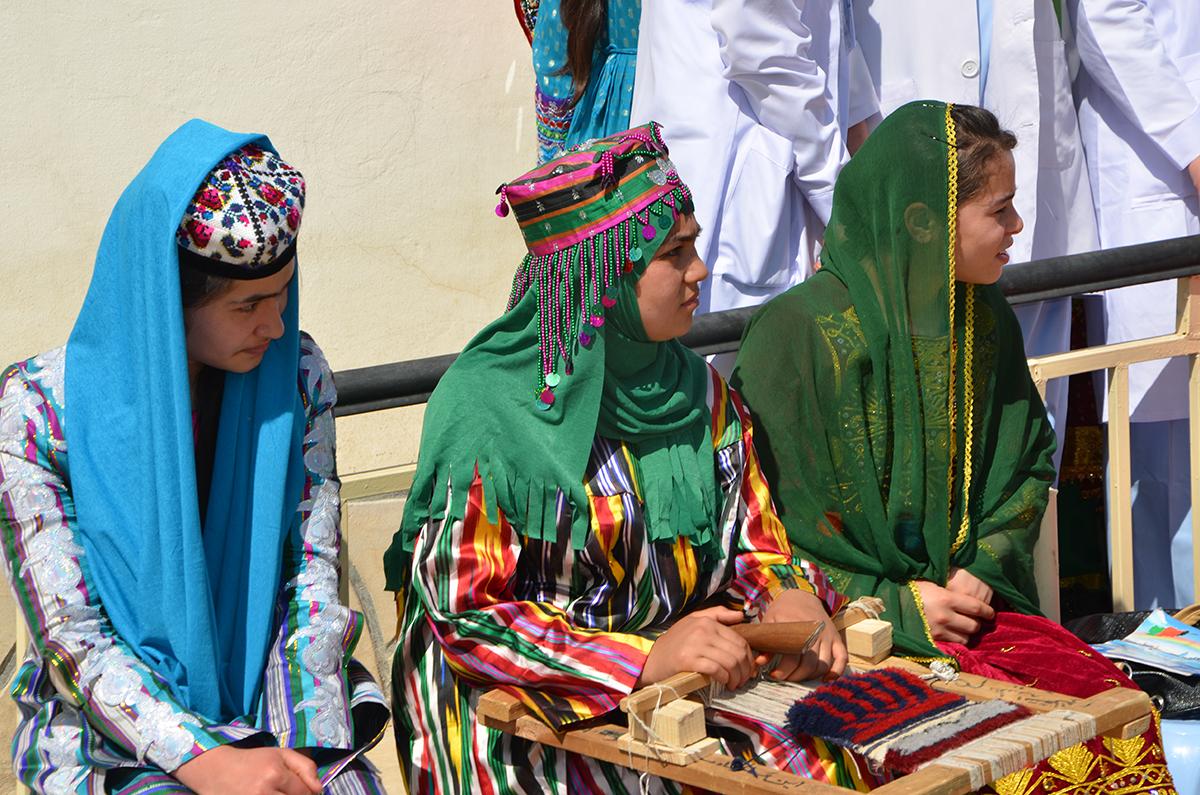
The culture of Afghanistan has persisted for over three millennia, dating back at least to the time of the Achaemenid Empire in 550 BCE. It is mainly a tribal society with different regions of the country having their own subculture. Almost all Afghans follow Islamic traditions, celebrate the same holidays, dress the same, eat the same food, listen to the same music, and are multilingual to some extent. Persian culture and architecture is still present. Some Zoroastrian festivals are still celebrated like the New Year "Navruz".

The Tajiks are heavily concentrated in the northeast, but also form large communities elsewhere, such as in western Afghanistan. The Hazaras tend to be mainly concentrated in the central region, while the Uzbeks are mainly in the north. In the southern and eastern region, Pashtuns live in accordance with Pashtun culture and are generally bilingual in Pashto and Dari.

Afghanistan has been the main crossroads of Central Asia, South Asia and the Middle East, which has greatly influenced its culture.

From the blog

20 November 2025

Pamiri's mazar

Pamiri mazars are small sacred sites found throughout the valleys of the Tajik and Afghan Pamirs, especially in the Wakhan. Often whitewashed and decorated with ibex or Marco-Polo sheep horns, they reflect a unique blend of spiritual traditions.

Author picture

Samuel Maret

31 July 2025

Inside a Traditional Pamiri House

Tucked high in the mountains of eastern Tajikistan, along the rugged spine of the Pamir range, lies one of Central Asia’s most isolated and fascinating cultural landscapes.

Author picture

Samuel Maret

8 June 2025

My Beautiful Jailoo

The jailoo, much like the alpine pastures of the Alps, are fragile paradises that must be respected. On the foothills of the Kyrgyz mountains, they represent a magnificent space of freedom where outdoor activities know no bounds. 

Pierre Armand

7 September 2024

Ak-Cholmok National Game

One of the oldest games of the Kyrgyz. The game can be played anywhere. Boys and girls play together. Players are divided into divisions according to age, and referees are chosen for the game. Each territory has its own name. The finish line is marked.

Author picture

Aidar Japarov